

Quick Links

- What Is A Facelift (rhytidectomy)?
- Who Is A Good Candidate For Facelift Surgery?
- What Concerns Can A Facelift Treat?
- Types Of Facelift Surgery
- How Our Surgeons Personalize Your Facelift
- Facelift Before And After: Natural-looking Results
- Combining A Facelift With Other Procedures
- Facelift Vs. Non-surgical Facial Rejuvenation
- Why Choose Straith Clinic?
- What Are The Risks?
- Facelift Surgery In Bingham Farms, Mi
Facelift surgery is one of the most requested procedures by our patients near Dearborn and West Bloomfield. As a result, facelifts, including the neck lift and the mini facelift, have become a specialty at Straith Clinic. There are many types of facial rejuvenation surgery available to rejuvenate the aging face, but alternatives also exist, including dermal fillers, microdermabrasion, IPL, and chemical peels. Deciding on the best surgical procedure will depend on your plastic surgeon’s expertise, your goals, the structure of the face, and the condition of the skin.

What Is a Facelift (Rhytidectomy)?
A facelift, also known as a rhytidectomy, is a cosmetic surgery procedure designed to improve visible signs of aging in the face and neck. Currently, the state-of-the-art option is a deep-plane facelift, with a platysmaplasty to address the neck.
As the natural aging process progresses, facial skin loses elasticity, facial fat shifts or diminishes, and the underlying tissues and facial muscles begin to descend. This results in sagging skin, deep wrinkles, nasolabial folds, jowls, and sometimes a double chin.
During facelift surgery, a skilled plastic surgeon carefully lifts and repositions the deeper facial layers, often including the superficial musculoaponeurotic system (SMAS), to restore youthful contours. The surgeon repositions the underlying muscle and tightens lax tissues before removing excess skin, ensuring a natural, not “pulled,” appearance.
Who is a Good Candidate for Facelift Surgery?
Good facelift candidates for facial cosmetic surgery include healthy individuals who are non-smokers. Patients who are experiencing sagging skin in the mid-face region, deep creases and excess skin below the lower eyelids or along the nose extending to the corners of the mouth, or loss of skin tone that creates jowls or fatty deposits under the chin and jaw could greatly benefit from a facelift. Those with realistic expectations are often the happiest with their facelift results.
What Concerns Can a Facelift Treat?
A facelift targets multiple visible signs of aging in the mid-to-lower face and neck. Common concerns include:
- Sagging skin along the cheeks and jawline
- Loose skin and banding in the neck
- Deep creases and deep wrinkles
- Prominent nasolabial folds
- Jowls and loss of jawline definition
- Accumulated excess fat beneath the chin
- Facial sagging caused by volume loss and tissue descent
expectations
What to expect for your Facelift surgery?

Anesthesia
Usually local with IV sedation.

Length of Surgery
3 to 4 hours.

In / Outpatient
Generally out-patient in our accredited on-site surgery center.
Types of Facelift Surgery
At Straith Clinic, we specialize in advanced facelift techniques. Facial rejuvenation comes in many forms, and our plastic surgeons can help you determine the best type of facelift surgery for your goals.
Traditional Deep-Plane Facelift
The traditional deep-plane facelift uses a combination of techniques that target the sagging tissues and loose skin of the cheeks, jowl line, and neck area. It gives you a more youthful facial appearance by reshaping the underlying tissues into their youthful position and re-draping the skin over the more youthful shaped face. In general, the traditional deep-plane facelift result is longer lasting than the “mini” techniques but requires a higher degree of invasive techniques and more recovery when compared to the “mini lift” techniques.
Mini Facelift
The mini facelift provides a less dramatic result. The branded mini facelifts, like the Weekend, One-Hour, Thread, or other “breakthrough” procedures, are a compromise when compared to the more traditional surgical techniques. If it has a fancy name, it is usually better marketing than medicine. As plastic surgeons, we are continually asked to provide more with less downtime. Patients have to be realistic. The mini facelift procedure, which is less invasive than the traditional facelift, will help rejuvenate the cheeks, and to a lesser extent, the neck. Mini facelifts are best suited for patients who want to correct minor sagging or drooping of the lower face, including the cheeks and jowls. Mini facelift and neck lift procedures involve fewer incisions than the traditional surgical facelift.
How Our Surgeons Personalize Your Facelift
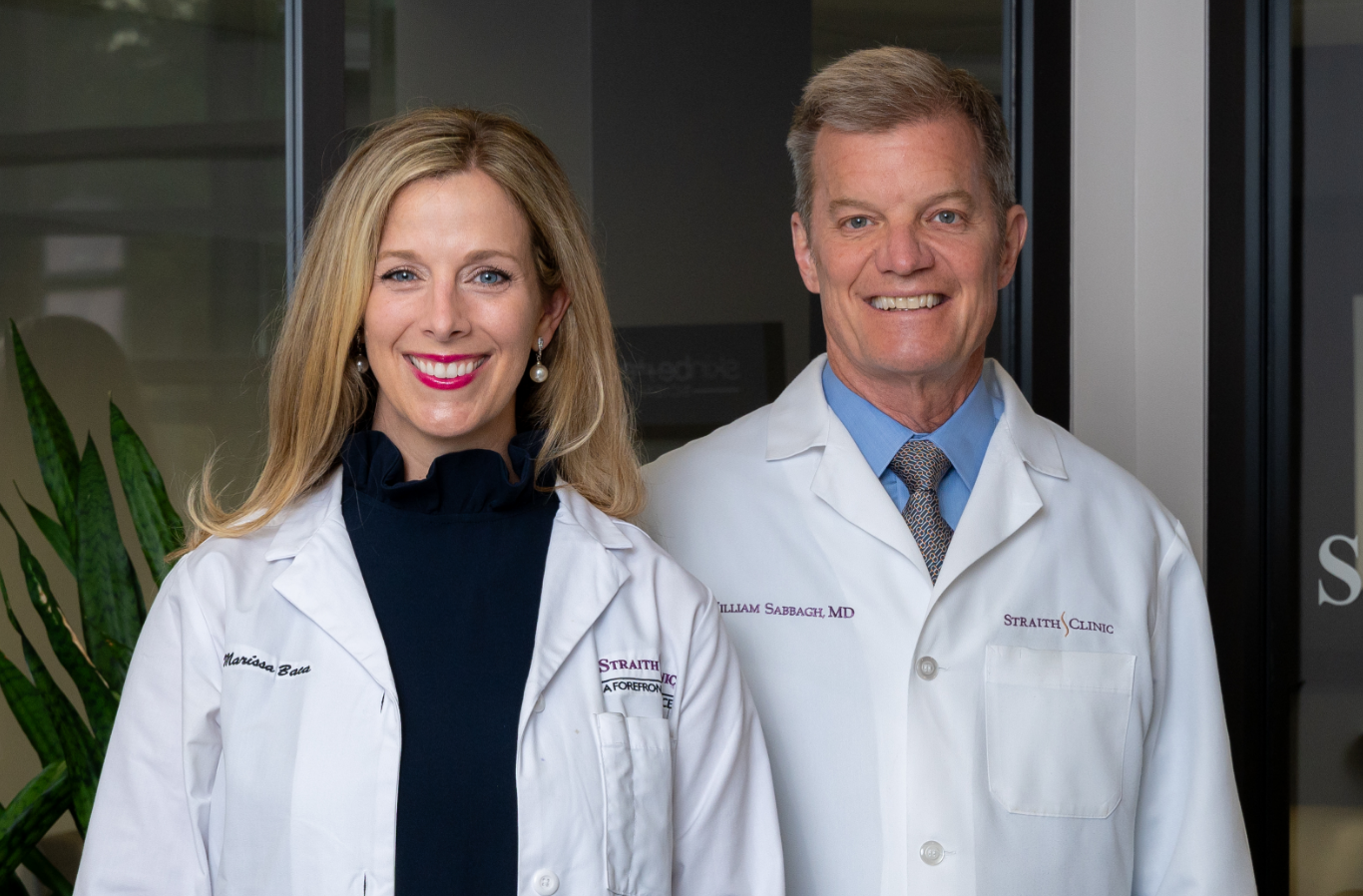
Every face is unique, which is why your procedure begins with a thorough facelift consultation. Dr. Sabbagh will evaluate your facial anatomy, skin quality, skin elasticity, and medical history to create a fully personalized treatment plan.
At Straith Clinic, we carefully review:
- Your specific signs of aging
- Any previous surgeries
- Current medications, such as blood thinners
- Existing medical conditions
- Your goals and realistic expectations
Attention to detail is essential; incision sites are strategically placed around the ears and hairline to minimize visible scarring and reduce the risk of permanent hair loss. Throughout the procedure, our surgeons take great care to protect facial nerves and reduce the risk of facial nerve injury or temporary changes in skin sensation.
Facelift Before and After: Natural-Looking Results
The goal of facelift surgery at Straith Clinic is dramatic, but natural-appearing results, refined rejuvenation; our before-and-after gallery showcases real patients who have achieved smoother jawlines, reduced facial sagging, and improved facial and neck definition. These results highlight how a well-executed surgical technique can soften deep wrinkles, redefine the jawline, and restore a refreshed, confident look.
View our facelift before-and-after gallery to see how personalized facial plastic surgery can help you achieve complete rejuvenation.
 2-3 Weeks
How long is Facelift recovery?
Most patients can return to work in 10 to 14 days. Strenuous activity should be avoided for 3-4 weeks after surgery. Bruising may last 2 to 3 weeks. Patients must limit exposure to the sun for several months.
Combining a Facelift With Other Procedures
Many patients choose to combine facelift surgery with additional procedures to address multiple areas of concern and achieve complete rejuvenation. Because facial aging affects the entire face, combination treatments often produce more balanced results. Common complementary procedures include:
- Neck lift to refine the jawline and treat neck banding
- Eyelid lift to address drooping lids or under-eye bags
- Brow lift to elevate the forehead and soften expression lines
- Fat transfer to restore lost facial fat
Facelift vs. Non-Surgical Facial Rejuvenation
Non-surgical treatments such as dermal fillers, laser therapy, chemical peels, and other minimally invasive options can effectively treat early signs of aging, including dynamic wrinkles and mild volume loss. However, these treatments cannot reposition sagging facial tissue or correct significant loose skin.
When deeper structural changes have occurred, only a surgical procedure like a facelift can reposition the underlying muscle and deeper support layers for long-lasting results. During your consultation, we will discuss whether facelift surgery or non-surgical options are best suited to your goals.
Why Choose Straith Clinic?
We understand that each patient is unique and requires a specific approach when considering facial surgery and we are experts in all techniques such as the traditional facelift, mid facelift, lower facelift, neck lift, mini facelift, endoscopic forehead lift, and brow lift. Meeting the unique needs of our patients coupled with our knowledge, experience, and training, is what separates us from other plastic surgeons and facial plastic surgery clinics in the Dearborn, Michigan area.
What Are the Risks?
No surgical procedure is risk-free, and that includes cosmetic surgery like facelift surgery. During your consultation with Dr. Sabbagh or Dr. Baca, they will review the risks so you can make an educated decision.
Facelift Surgery in Bingham Farms, MI
With an established track record of 90 years, an accredited facility, and thousands of satisfied patients throughout Dearborn, metro Detroit, Michigan, and the U.S., the Straith Clinic has earned an excellent reputation for cosmetic surgery of the face and body. Call us today at 248-270-5272 or send us an email to schedule a consultation during which you can discuss our facial and body services and tour our facility, including our on-site operating facility.
- What can I expect during the initial consultation?
- What’s the difference between a facelift and a neck lift?
- What should I do to prepare my skin before surgery?
- How long are the incisions, and where are they located?
- When will I see the results of my facelift?
- Are there age restrictions for undergoing a facelift?
- What can I do to ensure optimal healing after surgery?
- How do I choose the right facelift technique for my needs?
- Are follow-up appointments necessary, and how many will I need?
- Can I wear makeup after my facelift?
- How do I care for my skin after a facelift?
- Does insurance cover a facelift?